
Under the Same Waters
Sous les Mêmes Eaux • Bénin • 2026
In Benin, I brought into dialogue two systems of belief rooted in animism and ecological consciousness: Vodun practices in Benin and the traditions of Hinduism, Buddhism, and Jainism in South Asia, where I come from. The project examined the ways in which Vodun practices and South Asian spiritual traditions share ecological understandings based on reciprocity between humans, spirits, and the environment, as well as the impact of these relationships on ecological conservation.
I am particularly drawn to practices preserved and transmitted by women, and to the ways in which they may offer alternative approaches to the ecological crisis today. Across many cultures, women historically occupied central roles in maintaining systems of care, ritual transmission, herbal medicine, textile production, and cultural memory. These forms of labour and knowledge have often remained invisible. Women transmit knowledge not only as ritual agents, but also as primary caregivers resulting in the intergenerational transmission of cultural knowledge from mother to child. This invisible labour contributes to sustain communal relationships with the environment.
Cette exposition est réalisée dans le cadre d’Inspiration Bénin – Au Cœur des Mondes Africains, un programme de résidences de l’Ambassade de France au Bénin, en lien avec MansA – Maison des Mondes Africains et l’ADAC, mis en œuvre par l’Institut Français du Bénin. Michella Perera était accueillie à l’Espace Culturel Le Centre. Elle remercie son partenaire béninois Fortuné Agossa et Maison Rouge pour avoir accueilli l’exposition.
This exhibition has been produced as part of Inspiration Benin – At the Heart of African Worlds, a residency programme of the French Embassy in Benin, in partnership with MansA – Maison des Mondes Africains and ADAC, and implemented by the Institut Français du Bénin. Michella Perera was hosted by Espace Culturel Le Centre. She extends her sincere thanks to her Beninese partner, Fortuné Agossa, and Maison Rouge for hosting the exhibition.
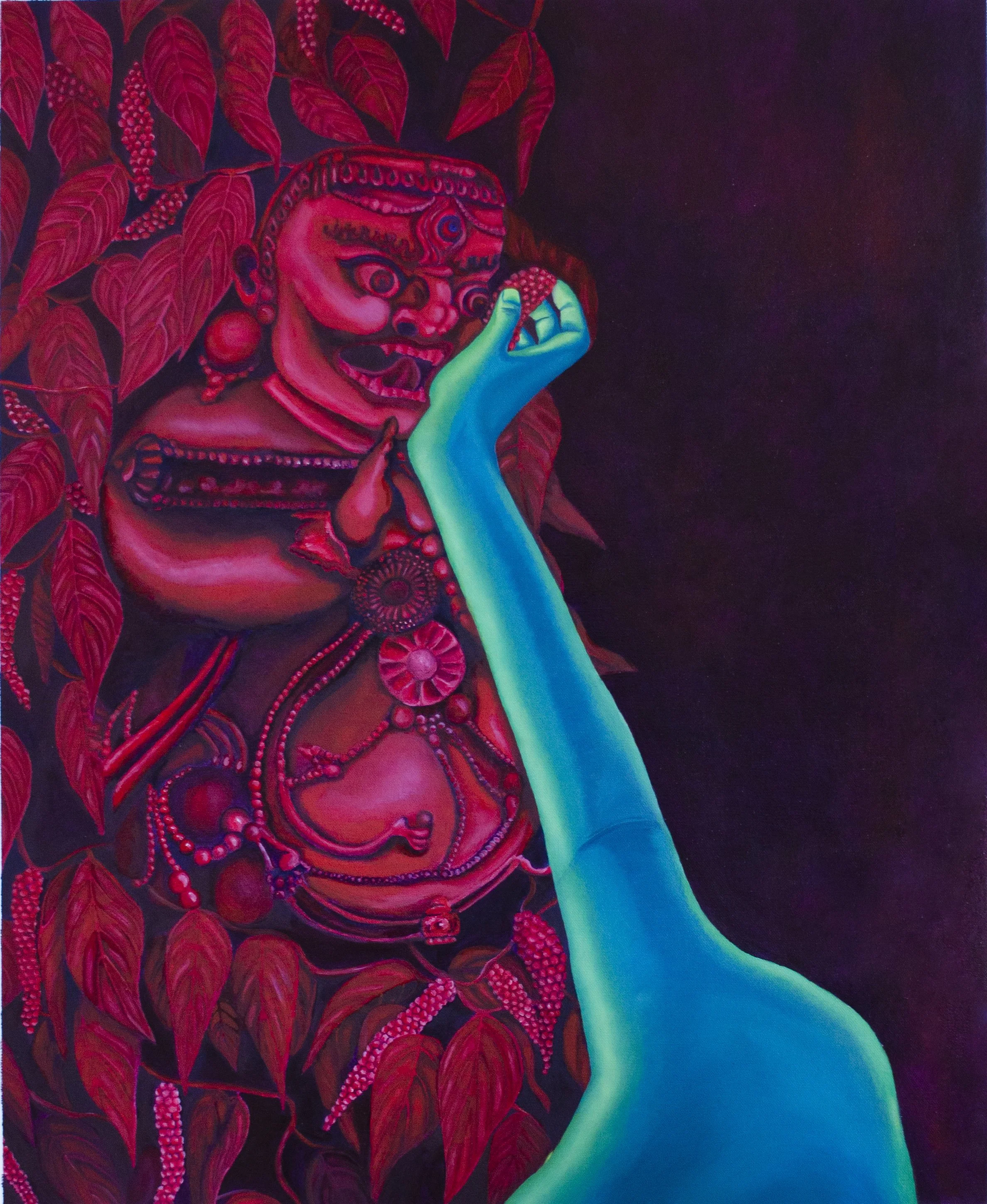
Luxury Goods And New Gods #1-3
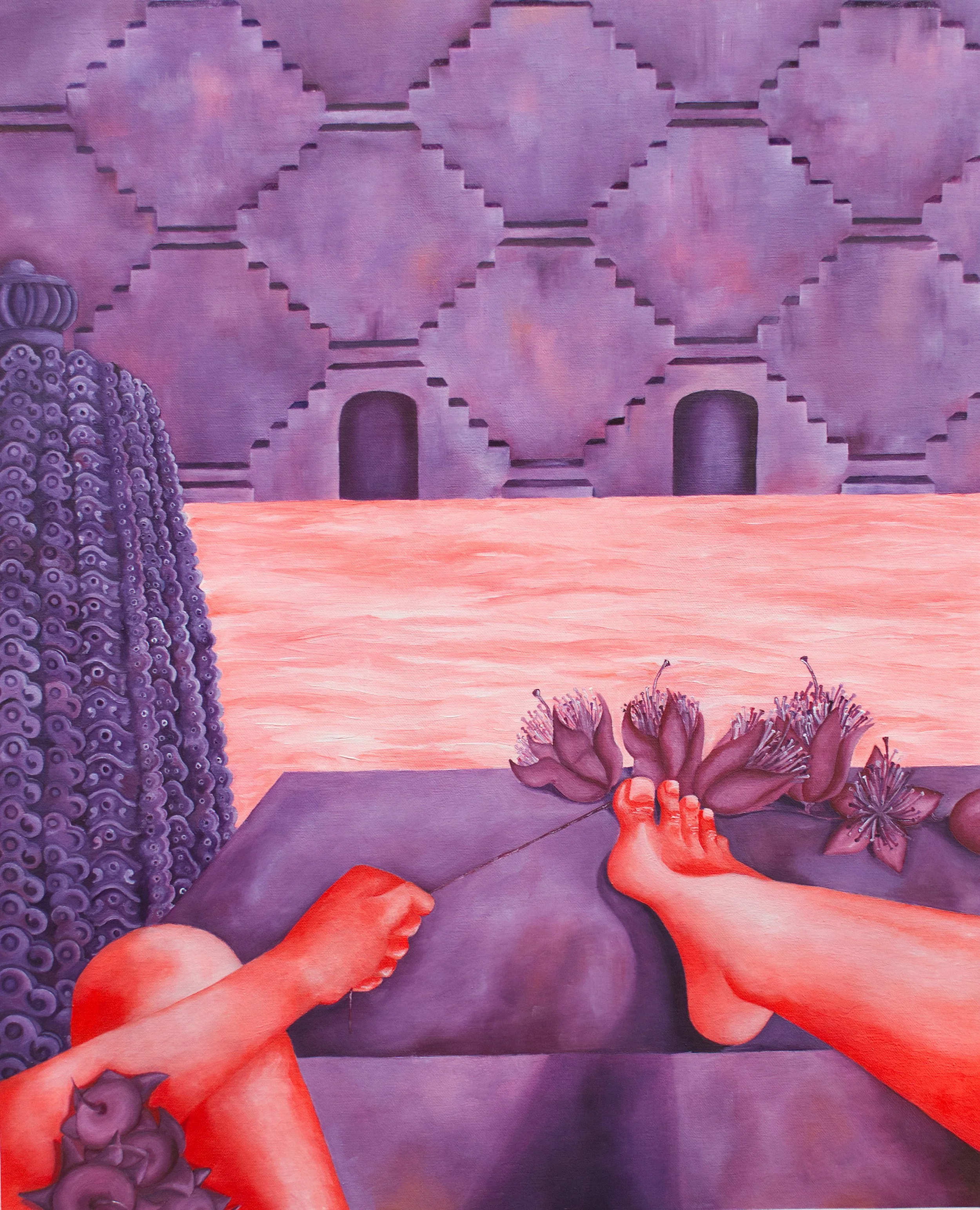
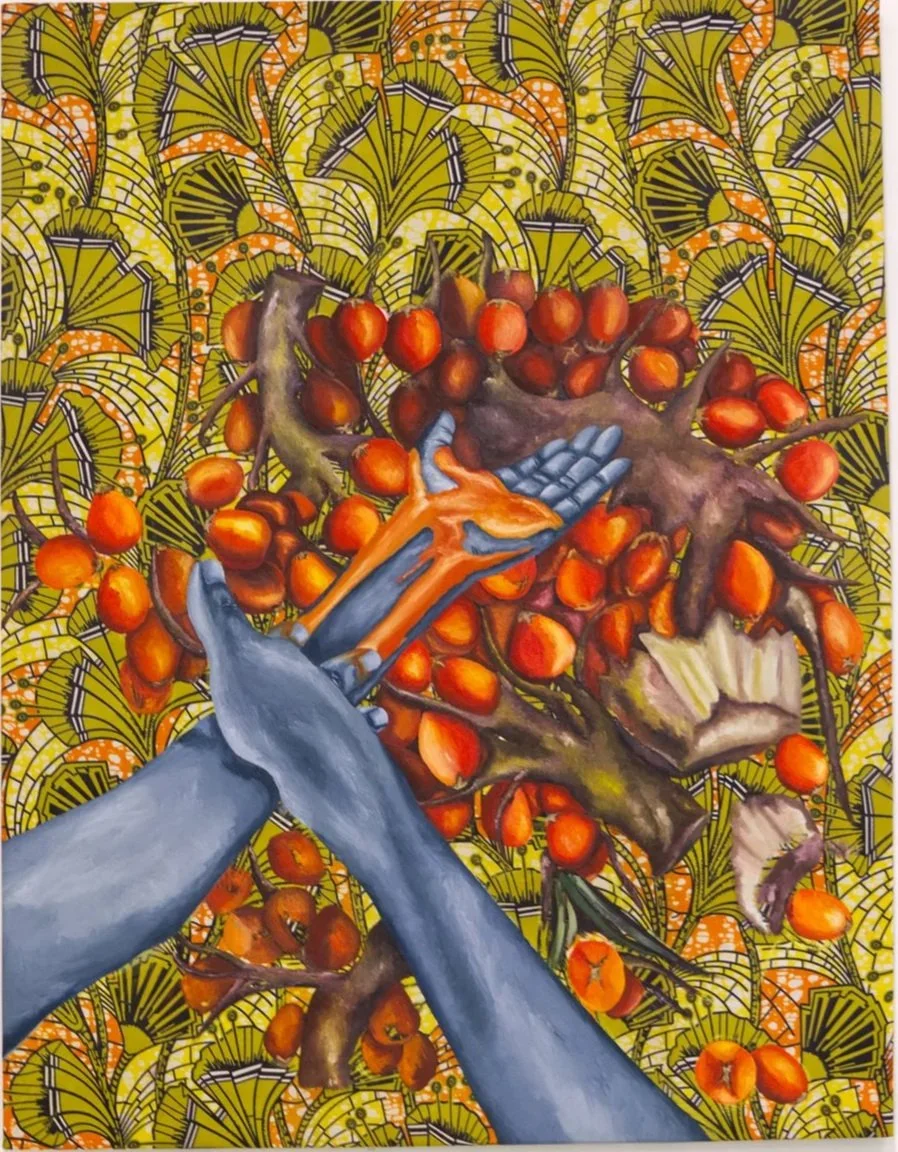
Perera draws inspiration from the diverse textile traditions of South Asia. Textiles and embroidered patterns often serve as forms of storytelling, and her paintings evoke ritual gestures, ancestral rites, and the ethnobotanical histories of the region. Piper nigrum , mangrove apples, and garnicia reflect longstanding Ayurveda traditions (traditional South Asian medicine) and regional cuisines. These plants have also been cultivated, traded, mythologised, and extracted across centuries. In Perera's work, they become fragments of knowledge systems and communal ways of living in which food, medicine, and spirituality were deeply interconnected, and ecological balance was maintained through everyday ritual practices.
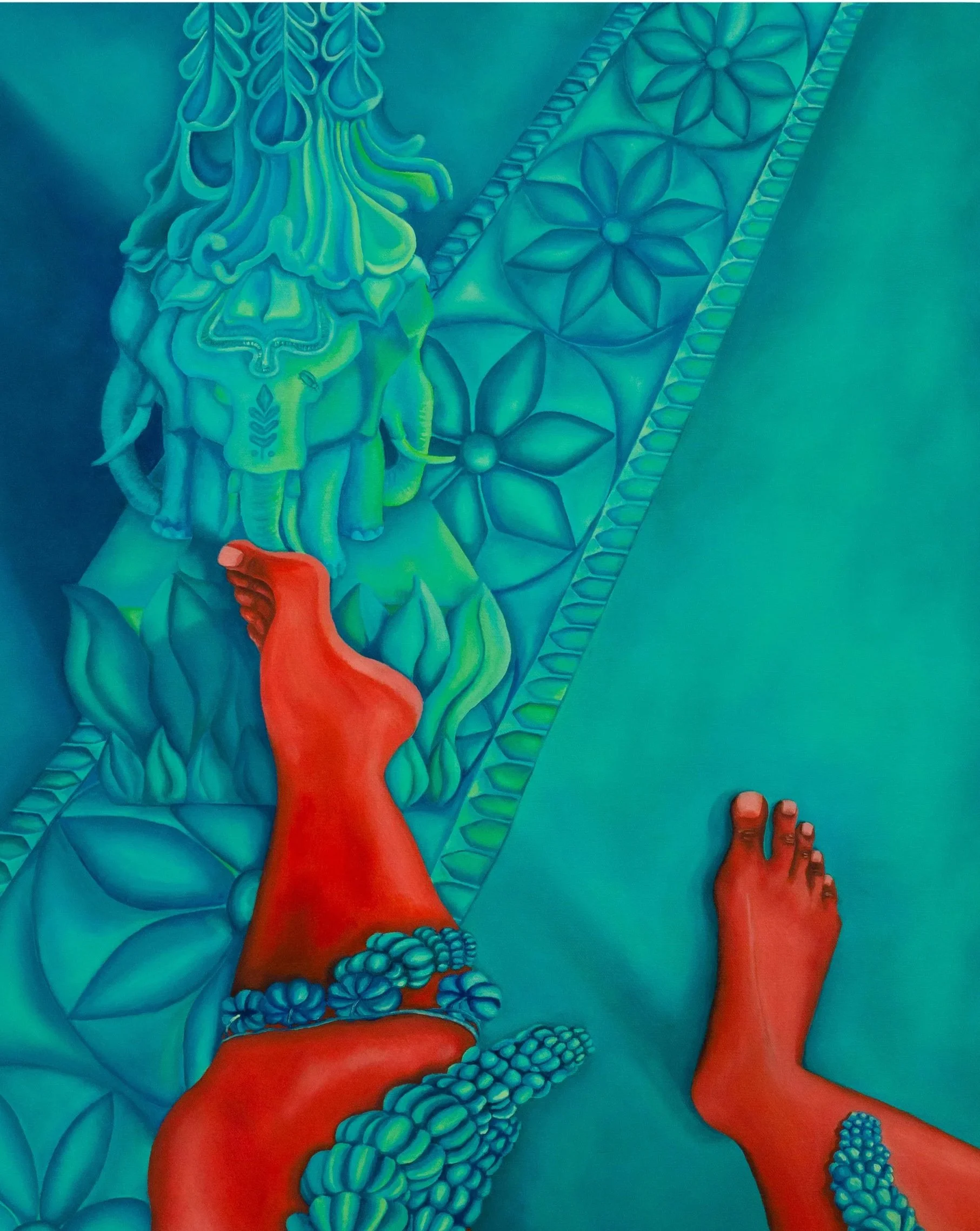
By Reason of Savagery and Superstition - # 1 - 4
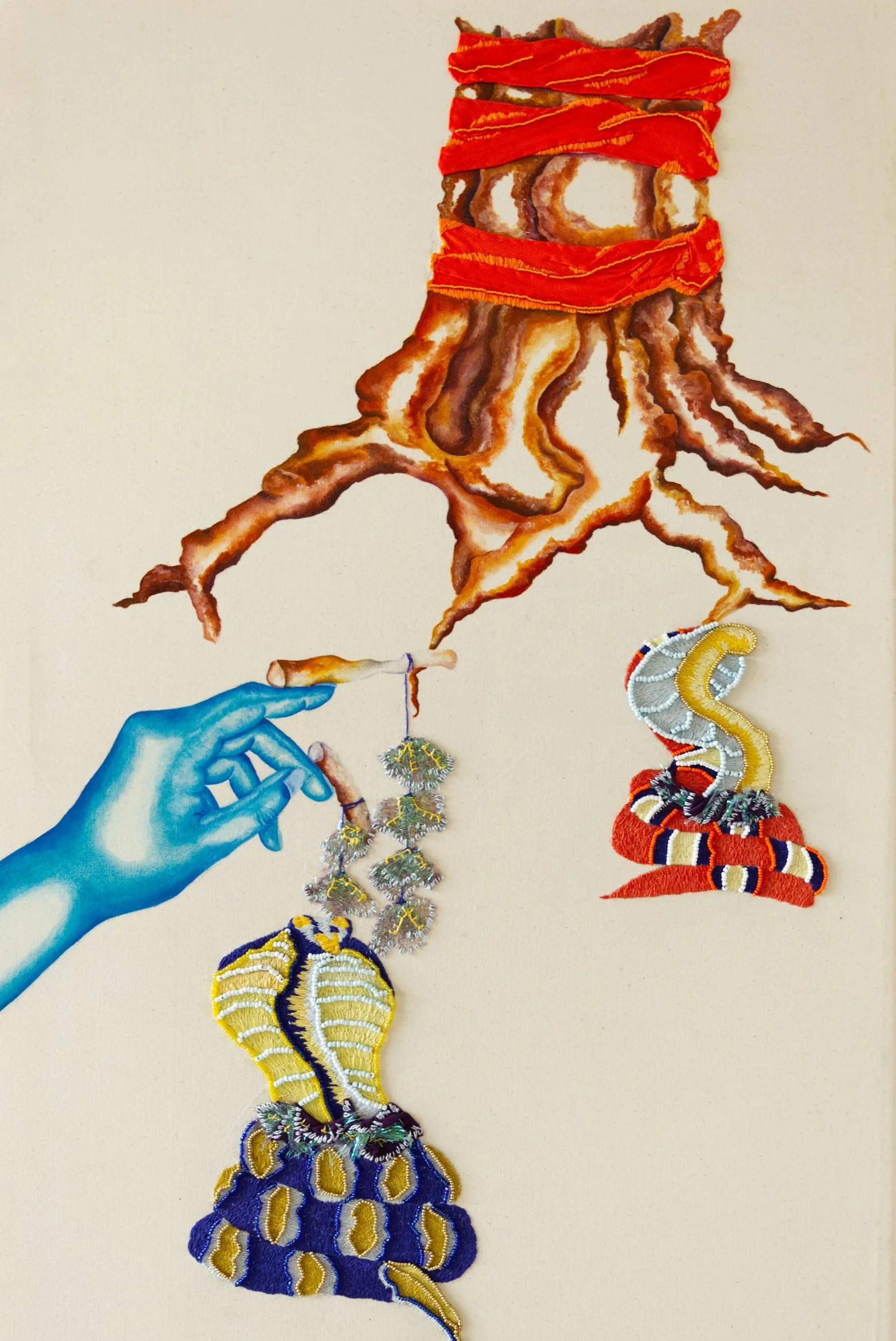
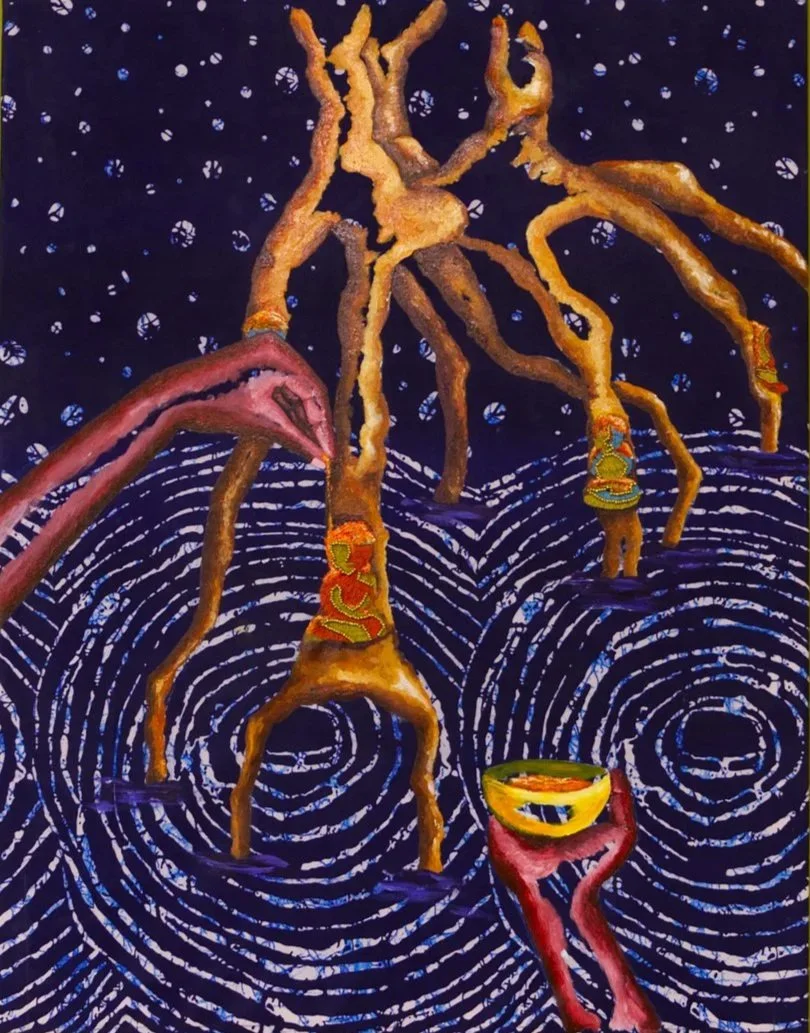
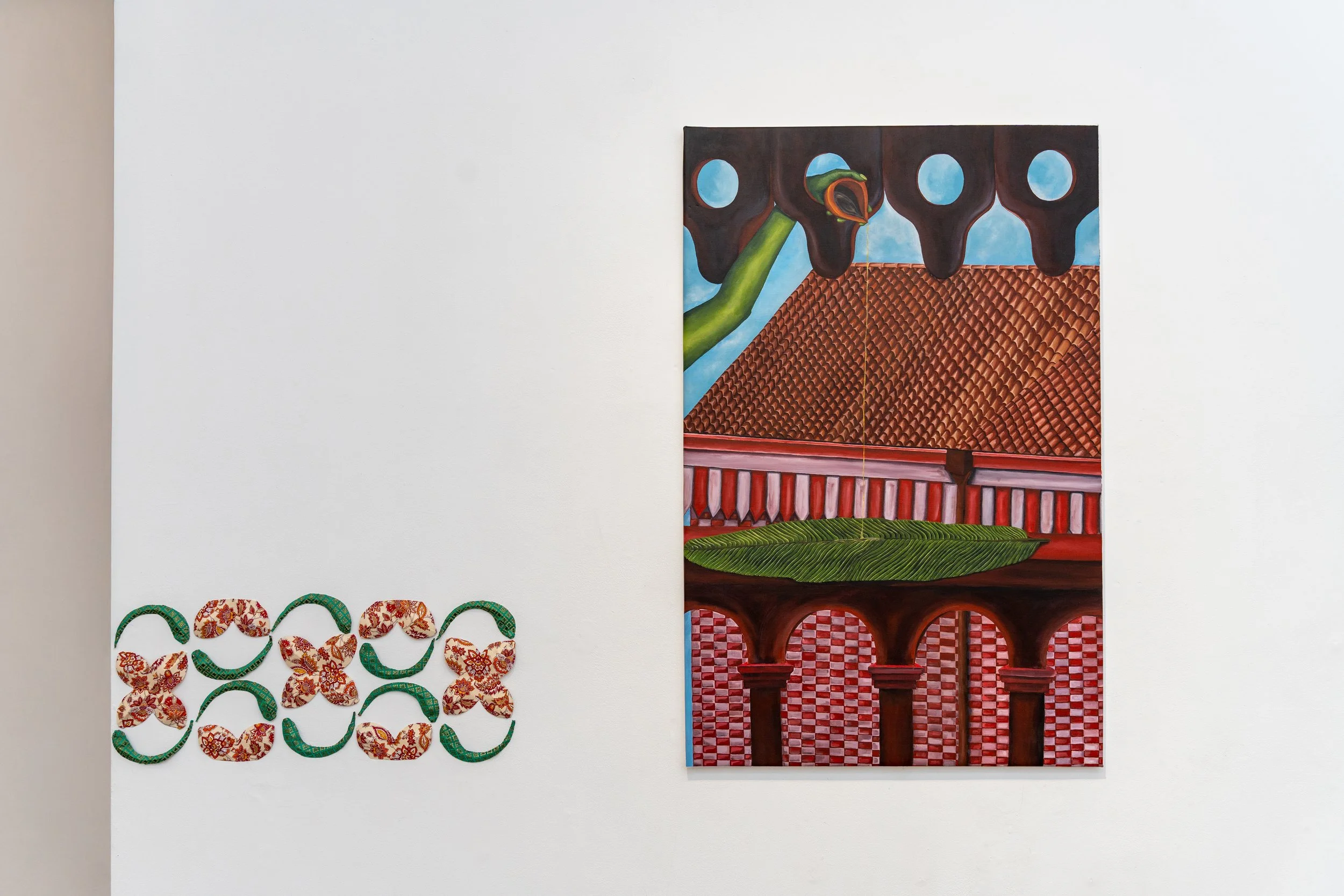
The title is a quote by British general Waddell which was said to justify the genocide of Tibetan Buddhists and the looting of their temples. By invoking this colonial memory, the work highlights histories of erasure and domination that shaped Western representations of non-European knowledge. The figures in the series challenge the notion of superstition, drawing on botanical and ritual knowledge from South Asia. Their gestures, inscribed within symbolic architectures, defy the idea of “savagery,” promoting speculative worlds where rituals and traditions are no longer marginal but recognised as creative and transformative forces.


Bitter Dialogues
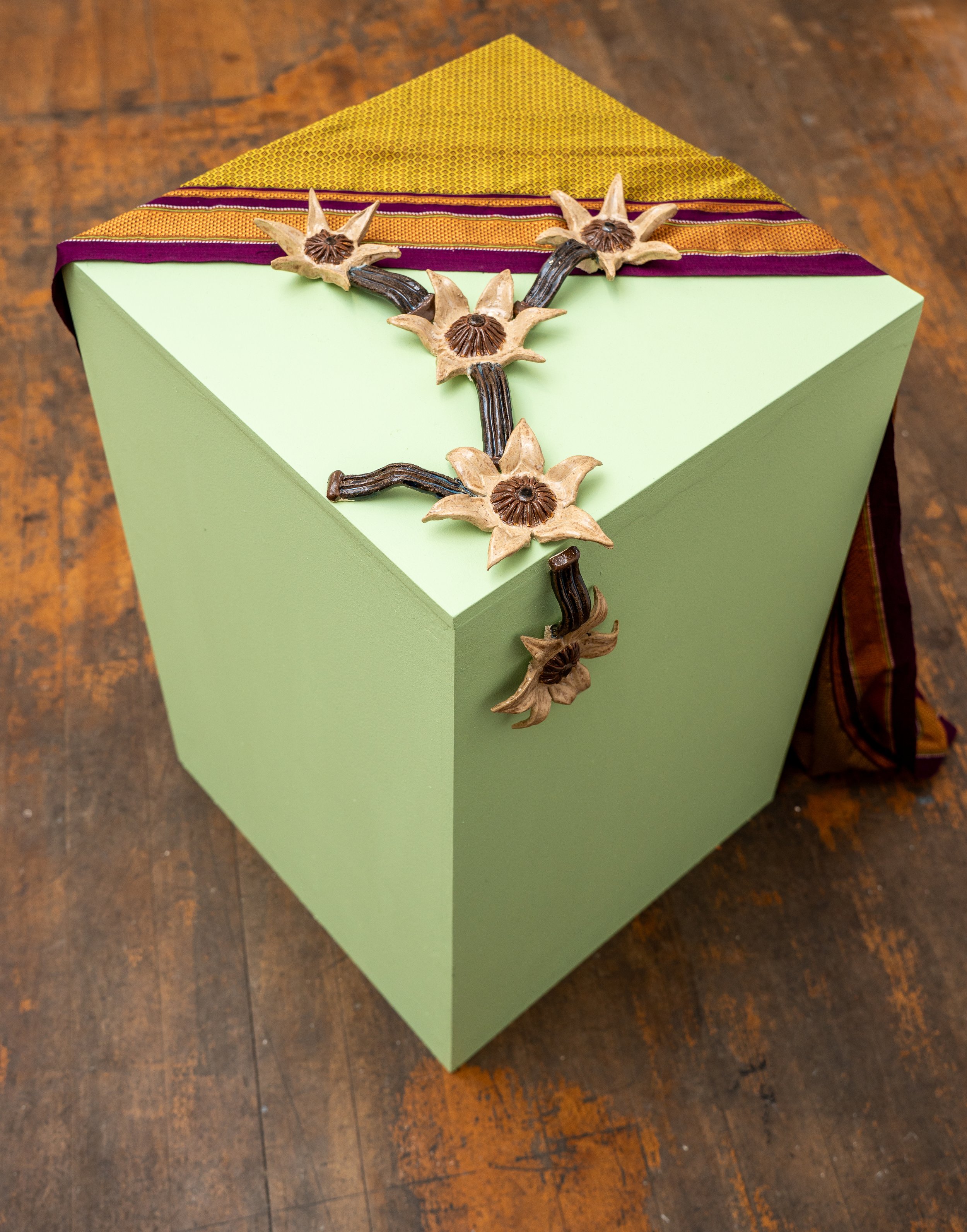
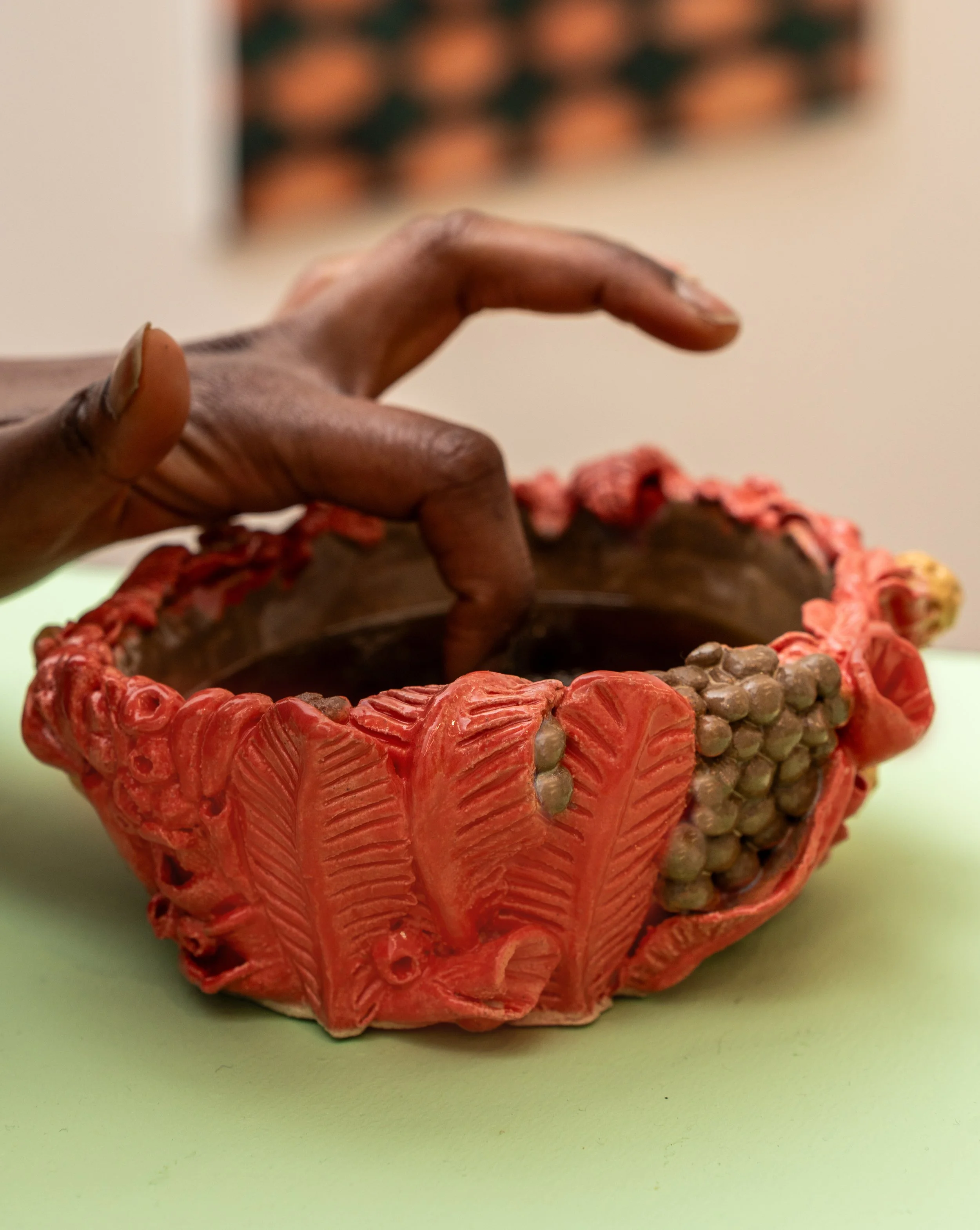
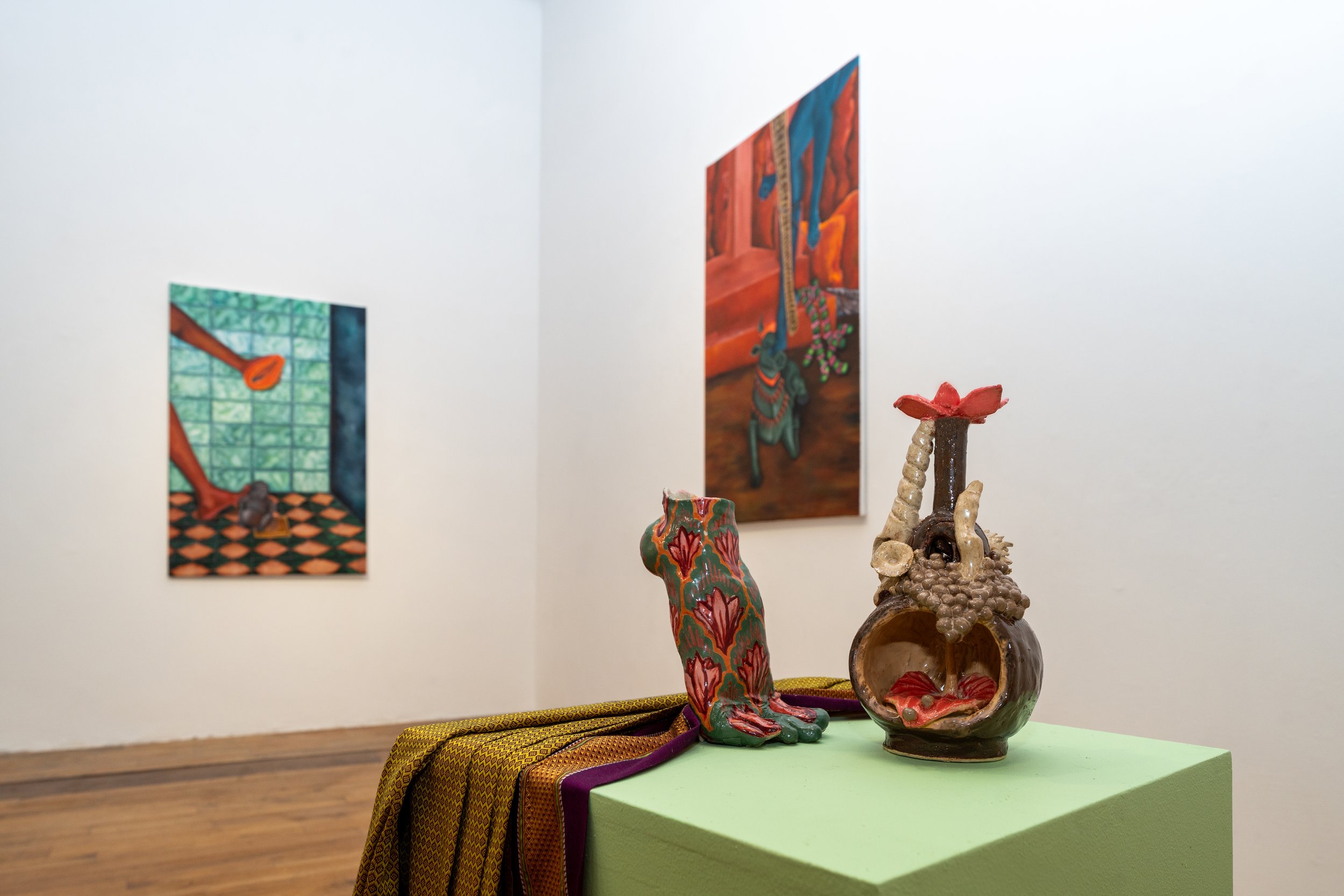
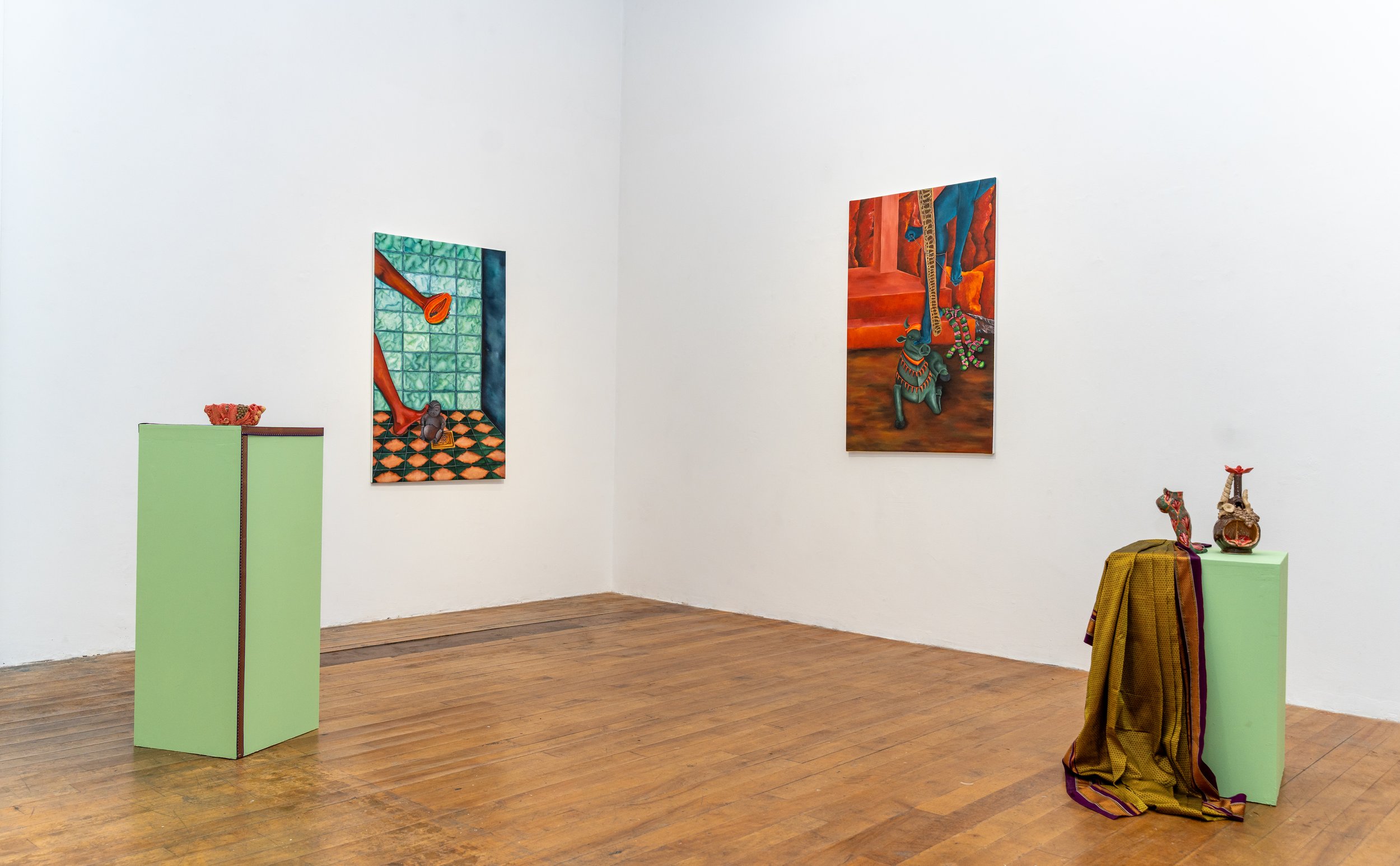
A series of richly decorated ceramics awaits a symbolic exchange. Biophilic forms, resembling fossils that coil around the pieces, invite the viewer into an unfamiliar world infused with latent knowledge of plants and minerals. These vessels are not just objects but mediators: they connect nature, culture, and ritual gesture. An invisible performance anticipates an encounter between materialities and subjectivities, where perfumed oils and dried, powdered plants become the conduits of a sensory and ritual dialogue.
Autopoiesis #5 - 7
The term autopoiesis, from the Greek auto (“self”) and poeisis (“creation”), in science describes systems capable of producing and maintaining themselves. I explore the term "self-creation" in a cultural and relational dimension: culture is not received passively but shaped by the landscapes we inhabit and the communities we interact with. The protagonists generate and sustain their own myths and rituals. In doing so, they invent new ways of inhabiting the world and create idiosyncratic relationships to cultural material. This approach foregrounds the idea that identity and knowledge are never fixed but constantly recreated through a process of self-creation in which practices, narratives, and gestures renew themselves through contact with the living. The work therefore reflects on how bodies, in interaction with local materials and vegetal environments, become producers of culture and carriers of ideas.
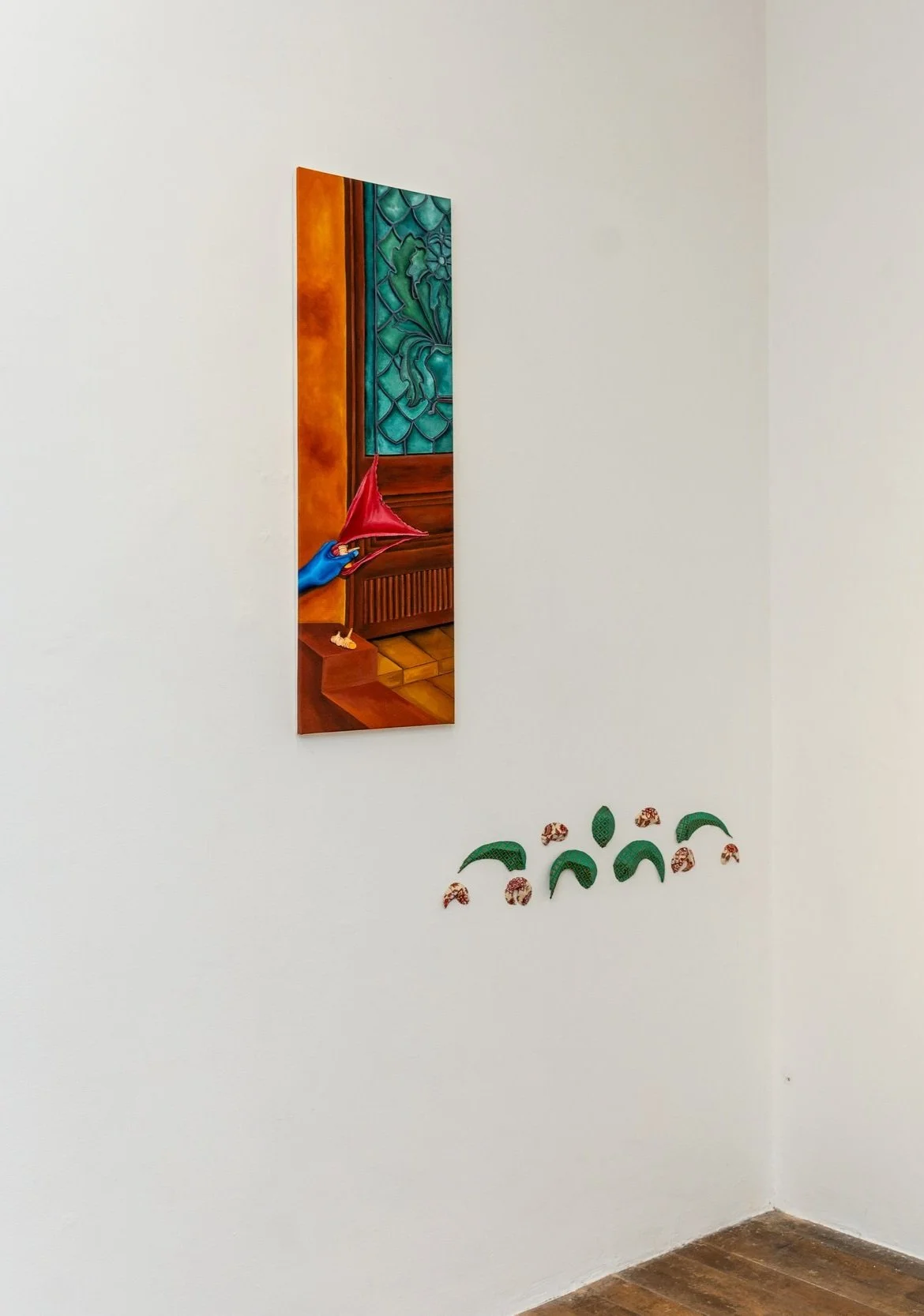

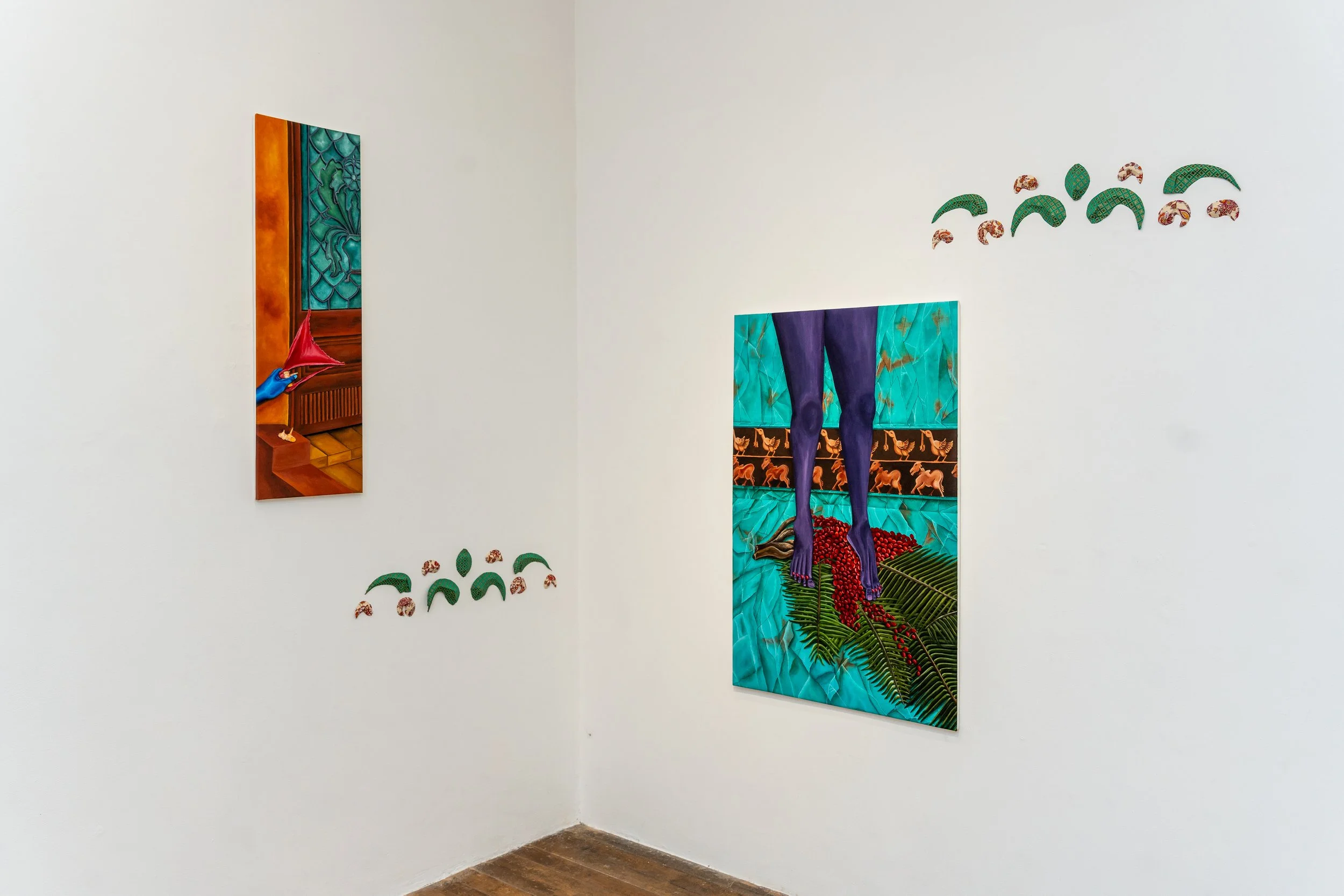
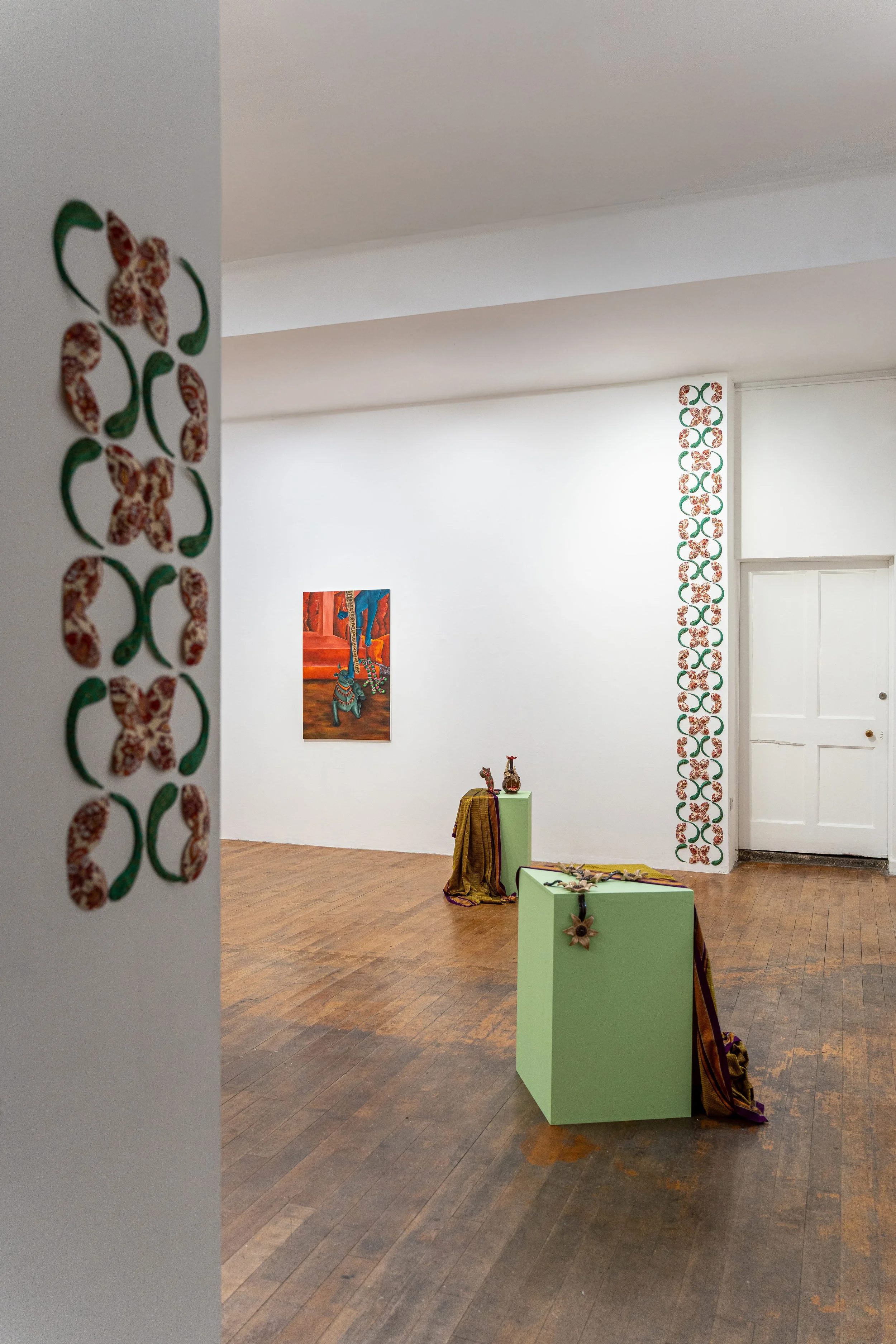
Exhibition view - Entangled in the History of the Idea
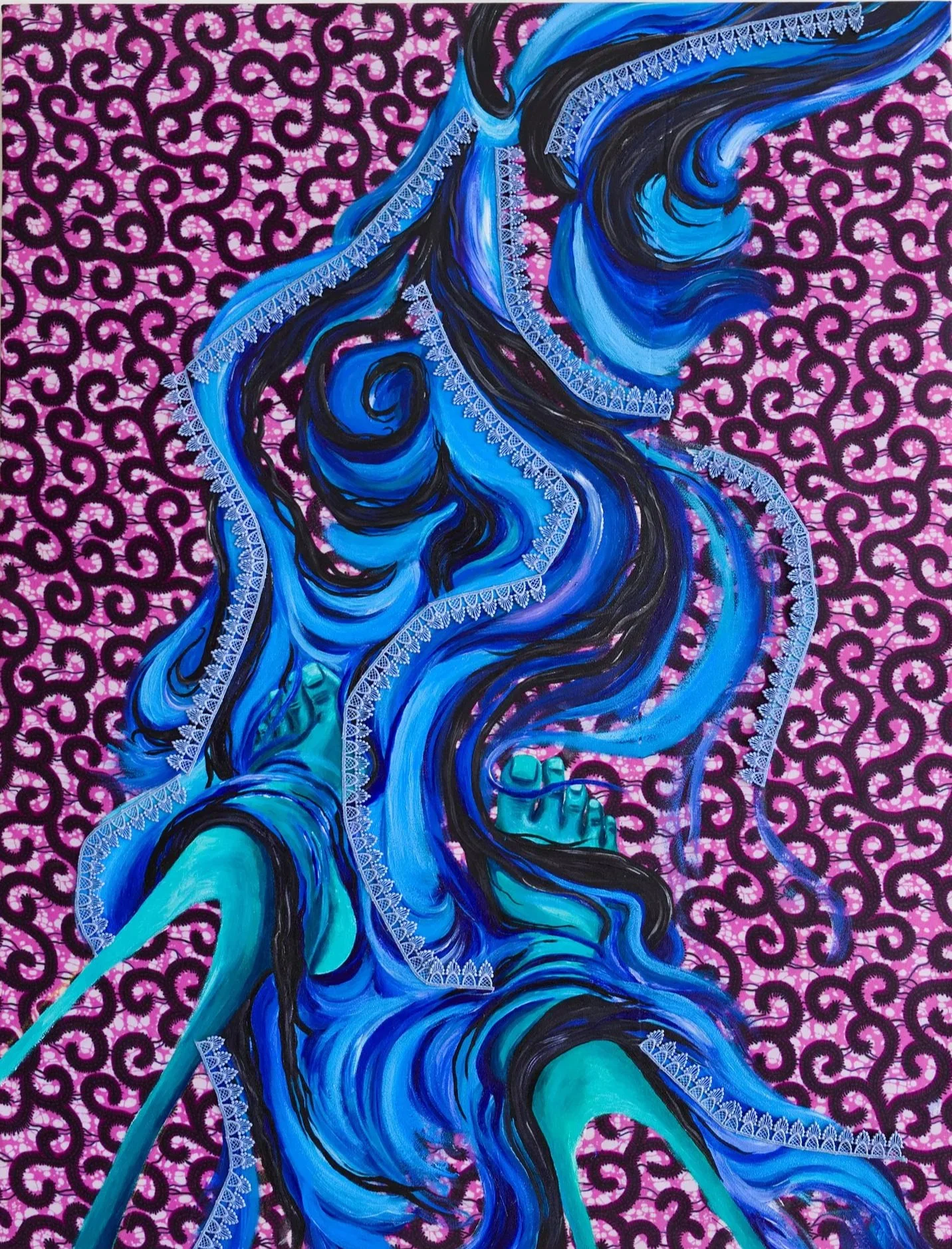
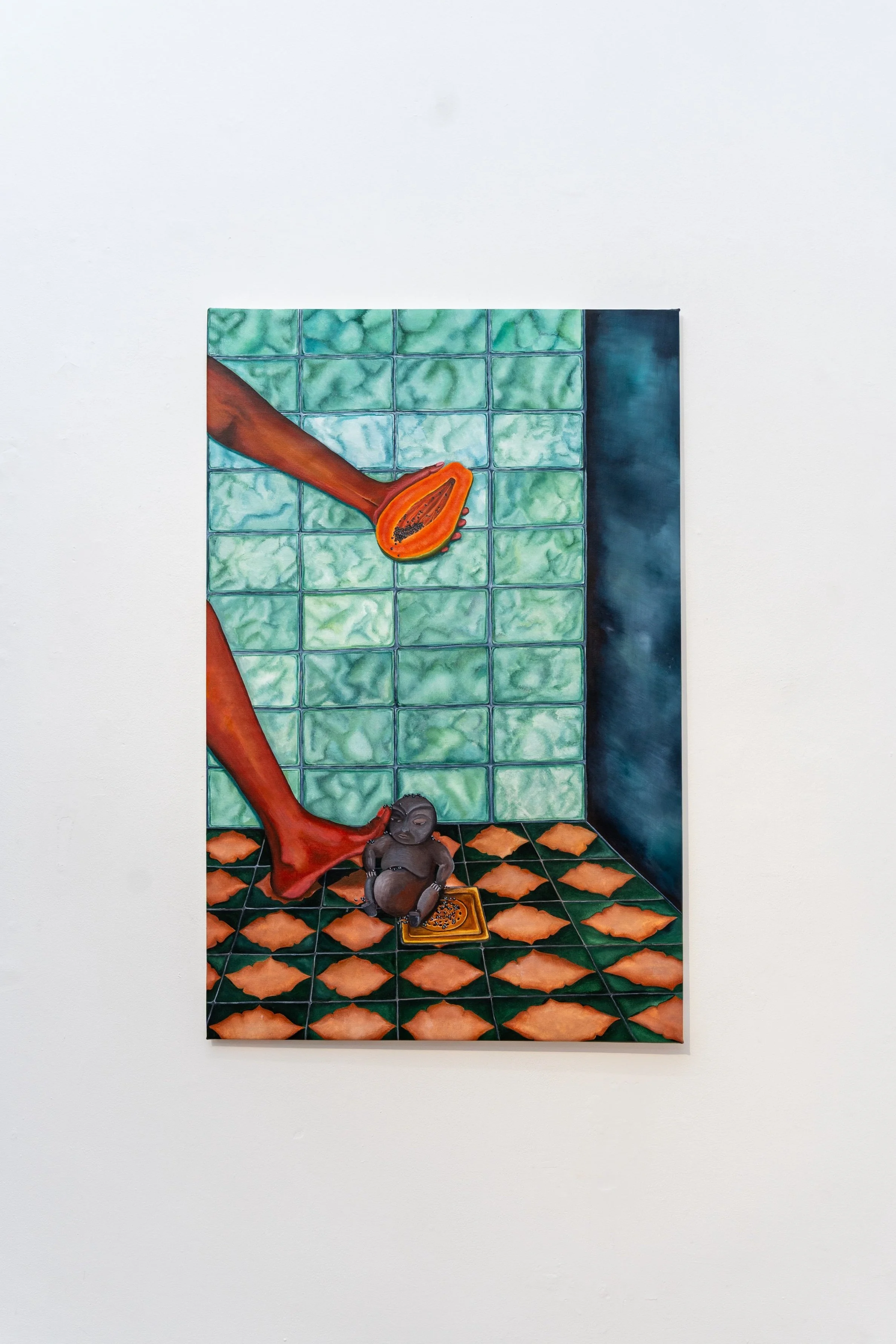
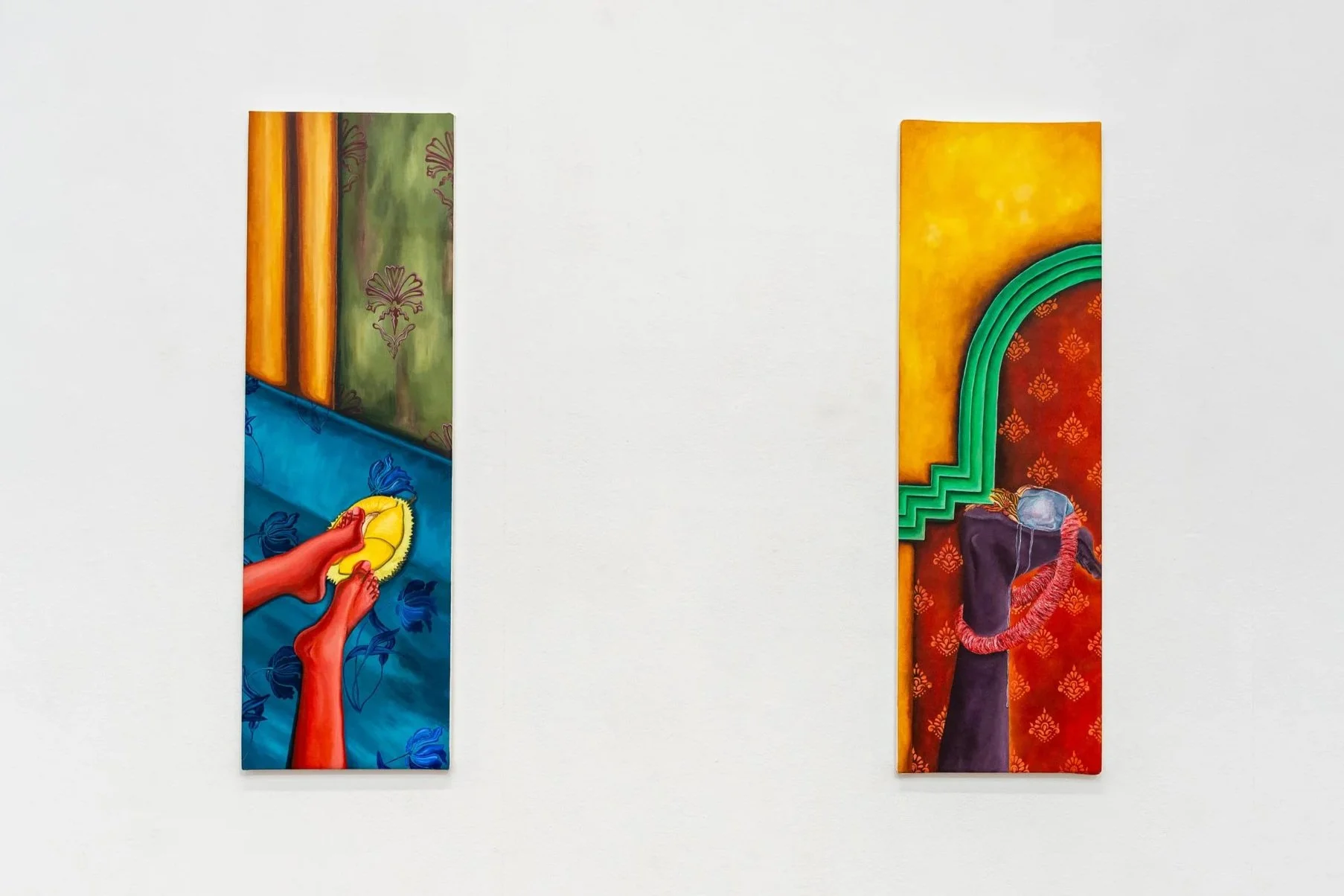
Entangled in the History of the Idea invites viewers into a speculative world built from an archive of shared storytelling, particularly within South Asian immigrant communities. Michella Perera’s acrylic paintings explore the paracosmos of a series of unidentified and highly pigmented women as they realise a more personal and intimate relationship to cultural material, forgoing traditional practices. Through their hands and feet, they extrude tactile knowledge, delineating an idiosyncratic understanding of their heritage and indigenous plant lore. Relief textile patterns punctuate the paintings, reminiscent of traditionally carved architectural elements, now reconfigured in the feminine practice of textile manipulation. Through these peculiar rituals the female protagonists reclaim the agency to create and structure their world - a place suggestive of ancestral worlds, compiled from nuanced cultural memories.
The exhibition draws its title from a quote by Paul Gilroy in The Black Atlantic “The especially crude and reductive notions of culture that form the substance of racial politics today are clearly associated with an older discourse of racial and ethnic difference which is everywhere entangled in the history of the idea of culture in the modern West.”
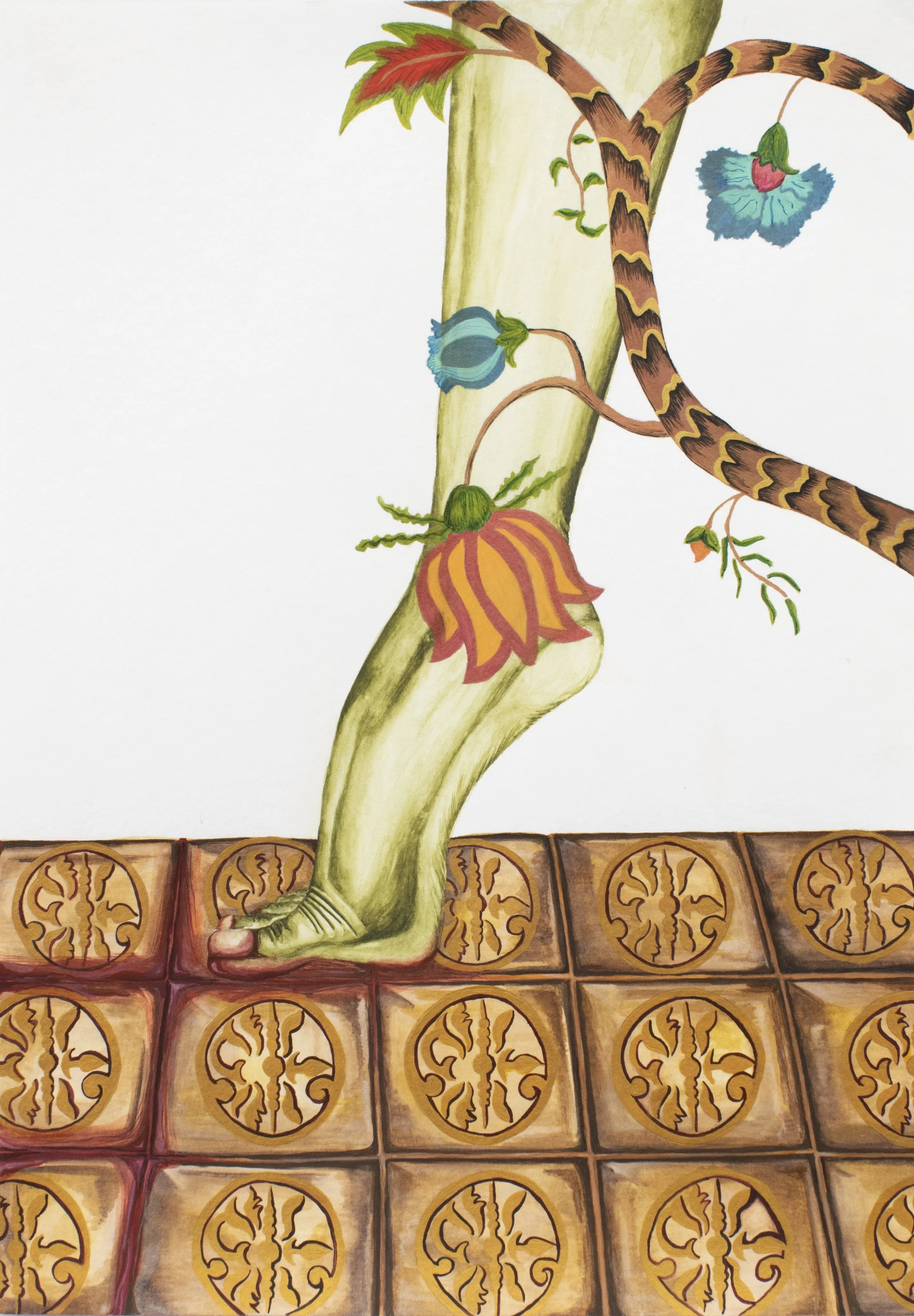
Two Monsoons
Watercolour on A3 Paper • 2024 - Ongoing
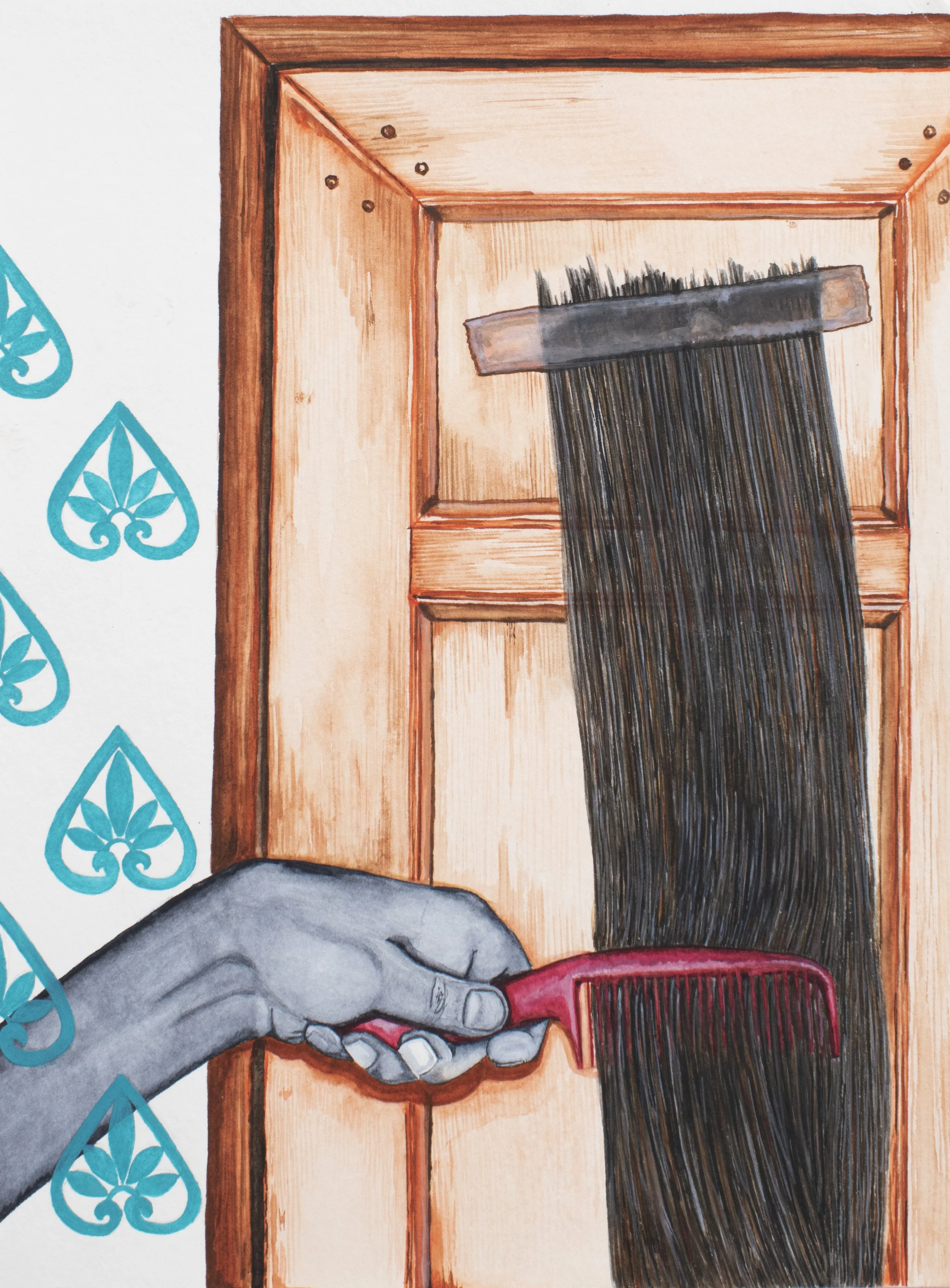
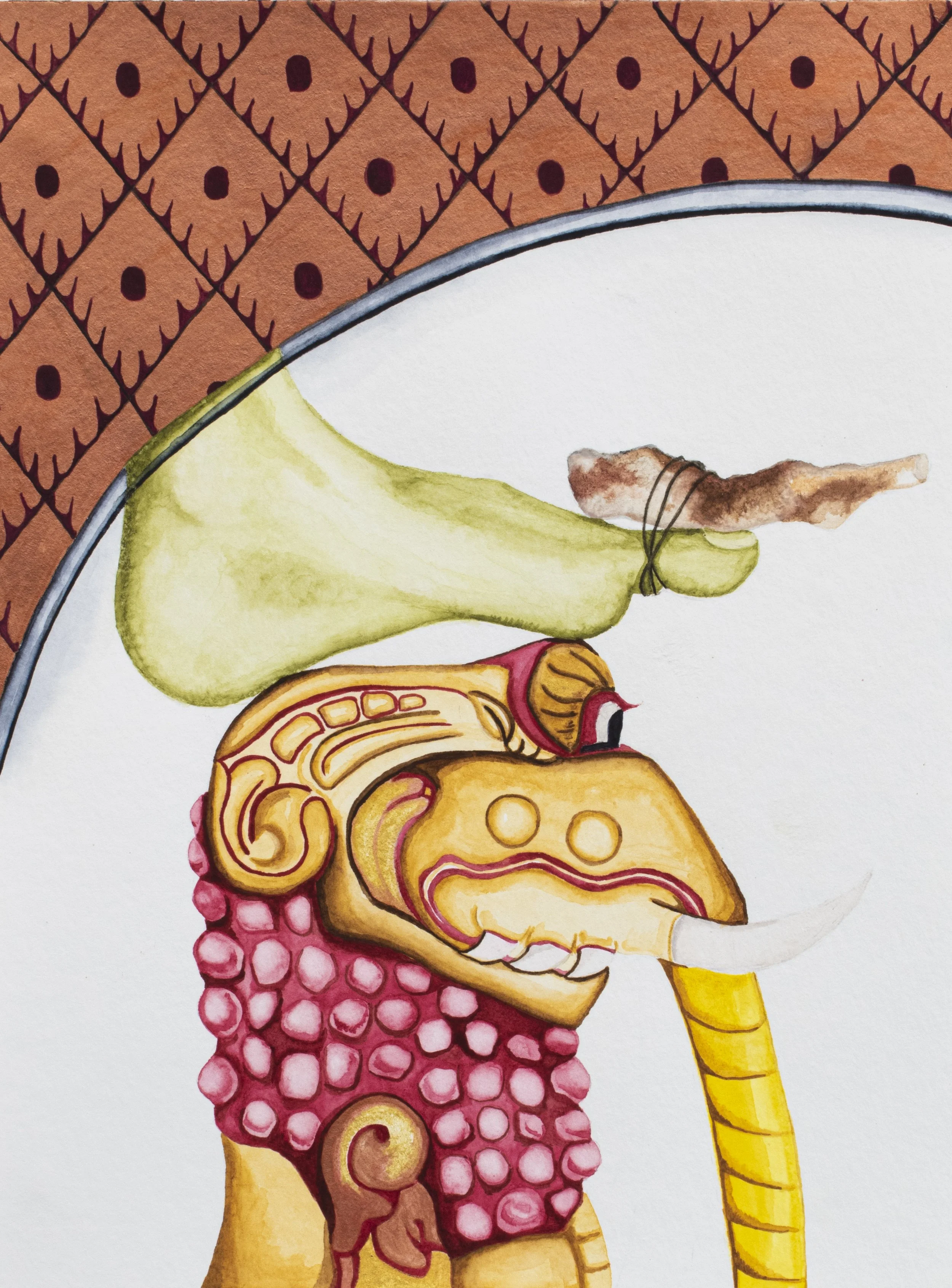
In the two watercolour series, unidentified female figures with skin coated in various pigments engage in unknown ritual acts that blur the boundaries between their body and their environment. Detached from social conventions and inherited cultural expectations, they cultivate intimate, sensory relationships with their surroundings. Through gestures that evoke superstition, or forgotten rituals, they seek embodied knowledge through pleasure, pain, and discomfort. Their actions propose an alternative mode of understanding, where the female body becomes a site through which ancestral knowledge is reimagined.
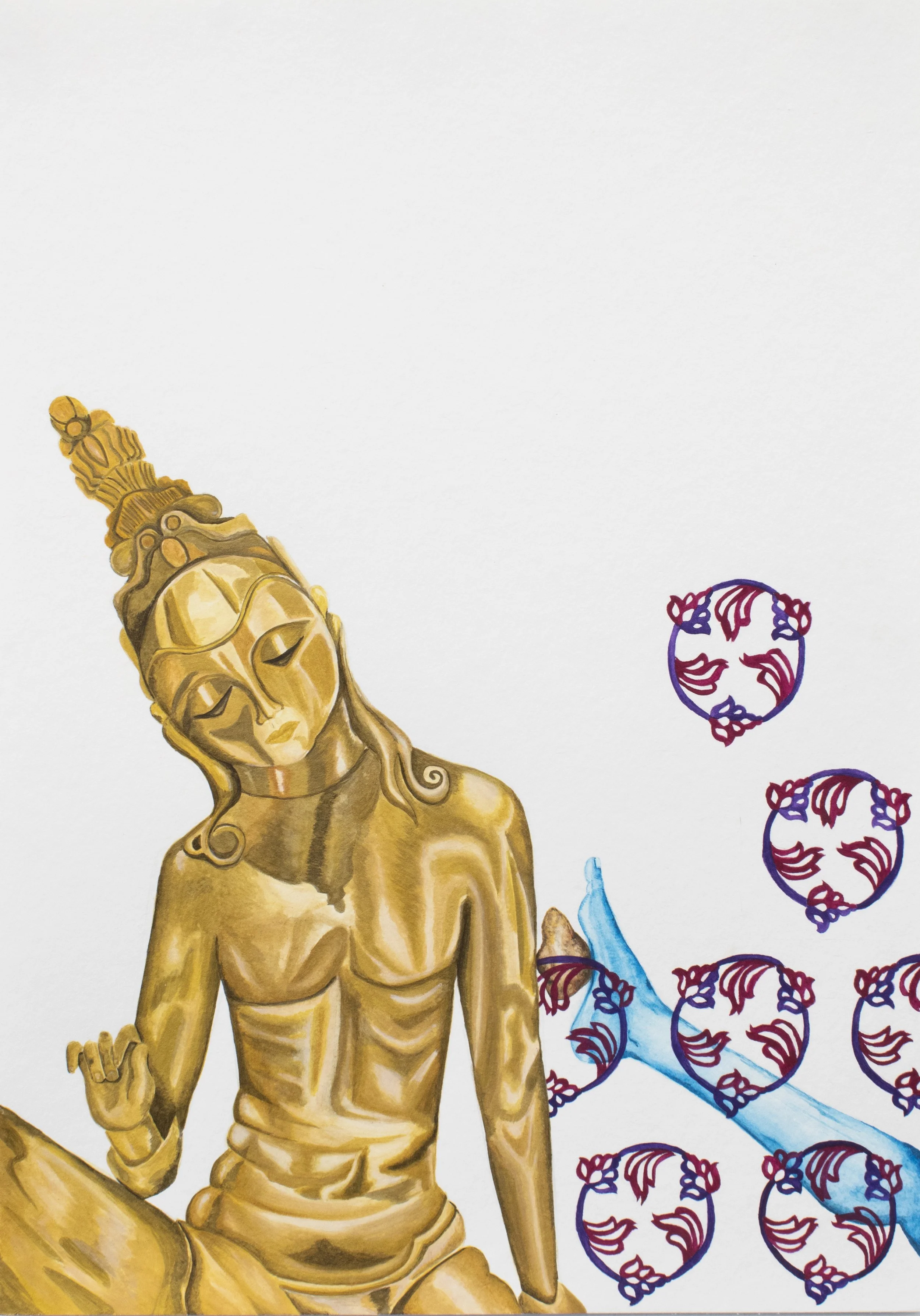
Cool Drinks, Short Eats and the Curve of a Punctuation Mark
Watercolour on A4 Paper • 2023


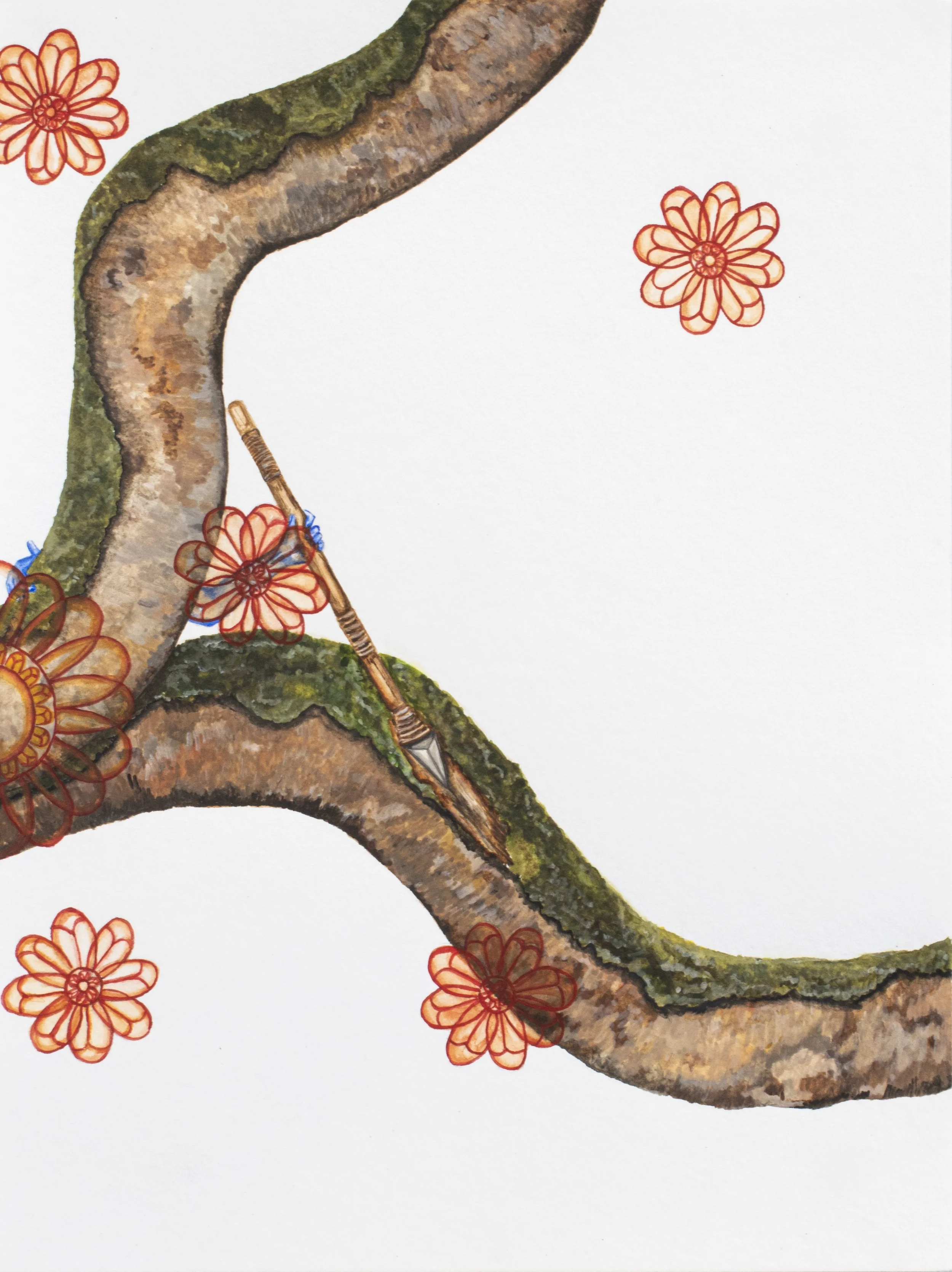

Stamps on Coarse Skin

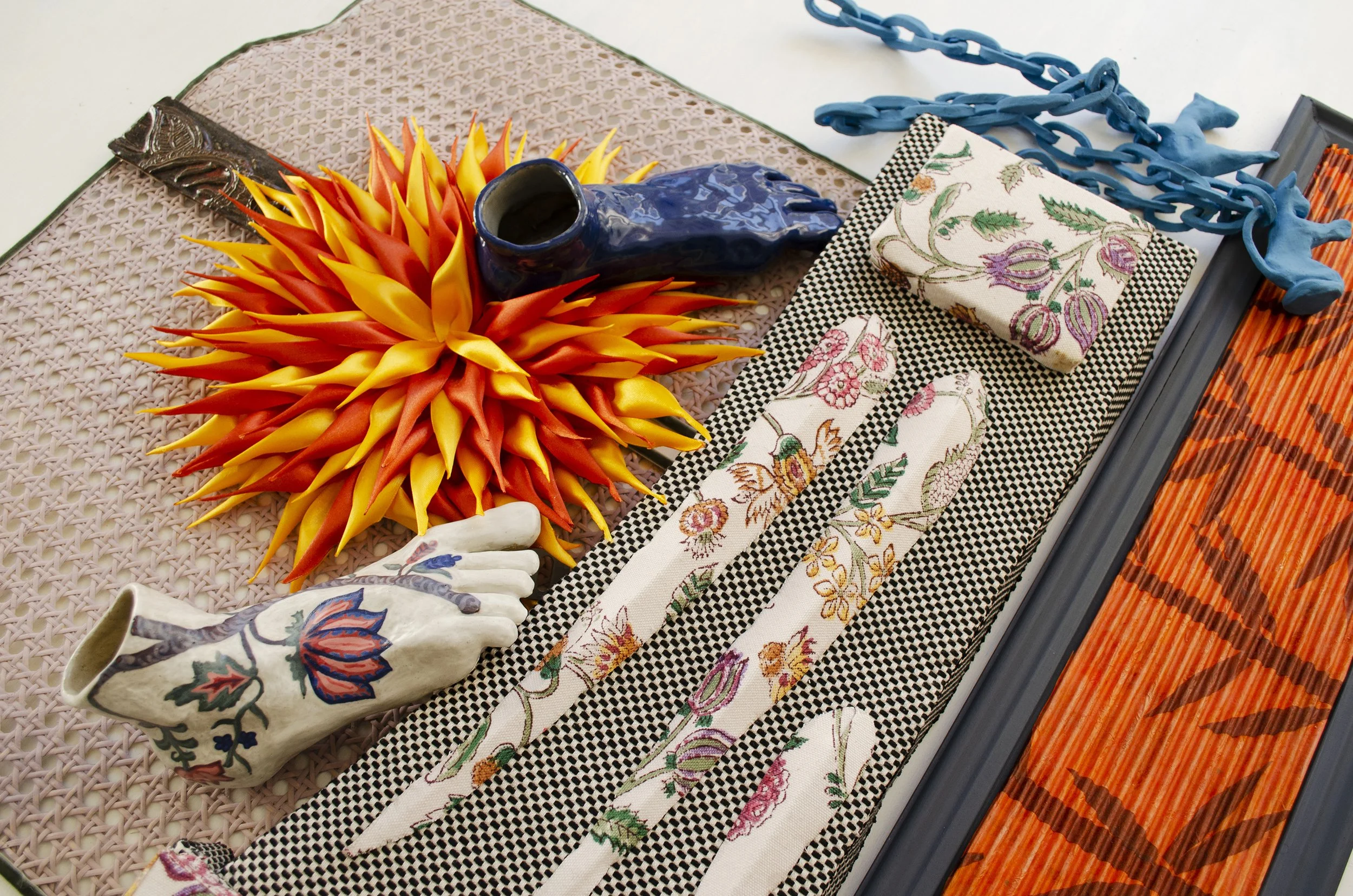
Ceramics, rattan, textiles, wood, paper • 2022
Stamps on Coarse Skin reimagines the practice of wood carving—historically codified as masculine—through the material language of textile manipulation. While sculpture traditionally entails a subtractive gesture of removing layers of wood, translating this into textile practice transforms the process into an additive one. In this work, layers of fabric are stitched together to create forms resembling wood carvings. This shift highlights the practice of creating or "sculpting" a space of familiarity for oneself within a hegemonic structure. Dominant practices must be displaced to foster a sense of familiarity within an environment, or even a world, to which one can never fully belong.
Tailored Breath

Mixed Media • Installation views • 2020
Tailored Breath is a collaborative exhibition between Marc Étienne and Michella Perera. In this installation, Perera explores the intimate relationship between rest, labour, and the body. Its sculptural form evoke reclining figures suspended between comfort and constraint, alongside architectural fragments drawn from the city of Glasgow. Emerging from her interest in how leisure shapes social life, the work examines the gradual disappearance of genuine rest within contemporary systems of documentation (social media).
